Prayer Made Tangible
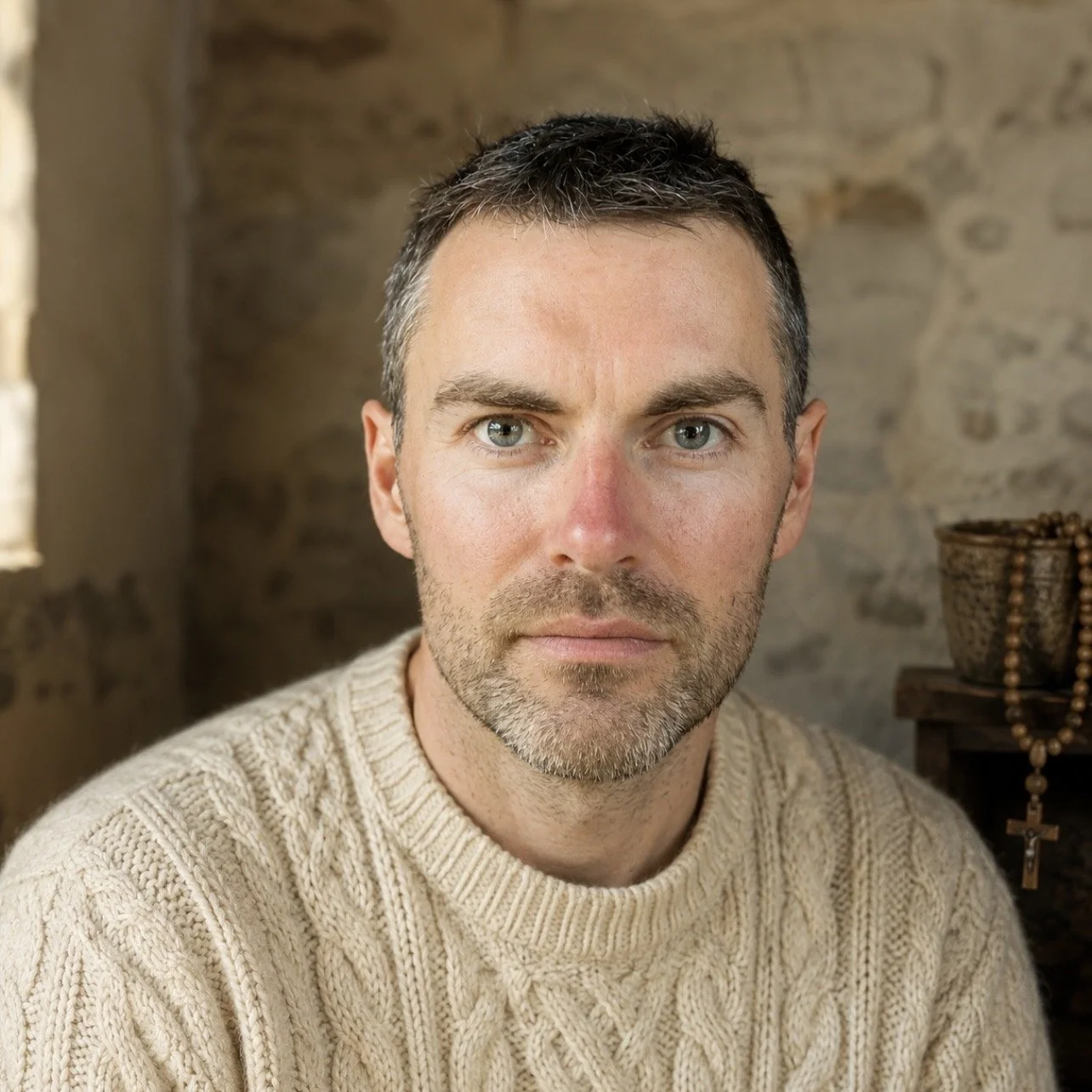
Sometimes in life we encounter a person who impacts the world with the work of their hands and the tending of life. Fiach O'Broin-Molloy is one such person. An Irish apiarist, artisan and writer living in Scotland, he is the maker behind Paisley Honey, where handmade rosaries, prayer beads and devotional objects emerge from a life shaped by faith, craftsmanship and the quiet rhythms of beekeeping. Rooted in the Christian contemplative tradition and inspired by the spiritual inheritance of places such as Iona, Fiach's work reminds us that ordinary materials—and ordinary acts of care—can become vessels of grace. Through both his writing and his making, he invites us to slow down, pay attention, and rediscover the sacred in the work of our hands, the life of the natural world, and the simple, faithful practices that bind us to God and to one another. Please join me in welcoming Fiach to ConsecratetheDay.
Prayer Made Tangible:
What Handmade Devotional Objects
Teach Us About Attention, Intention and the Sacred
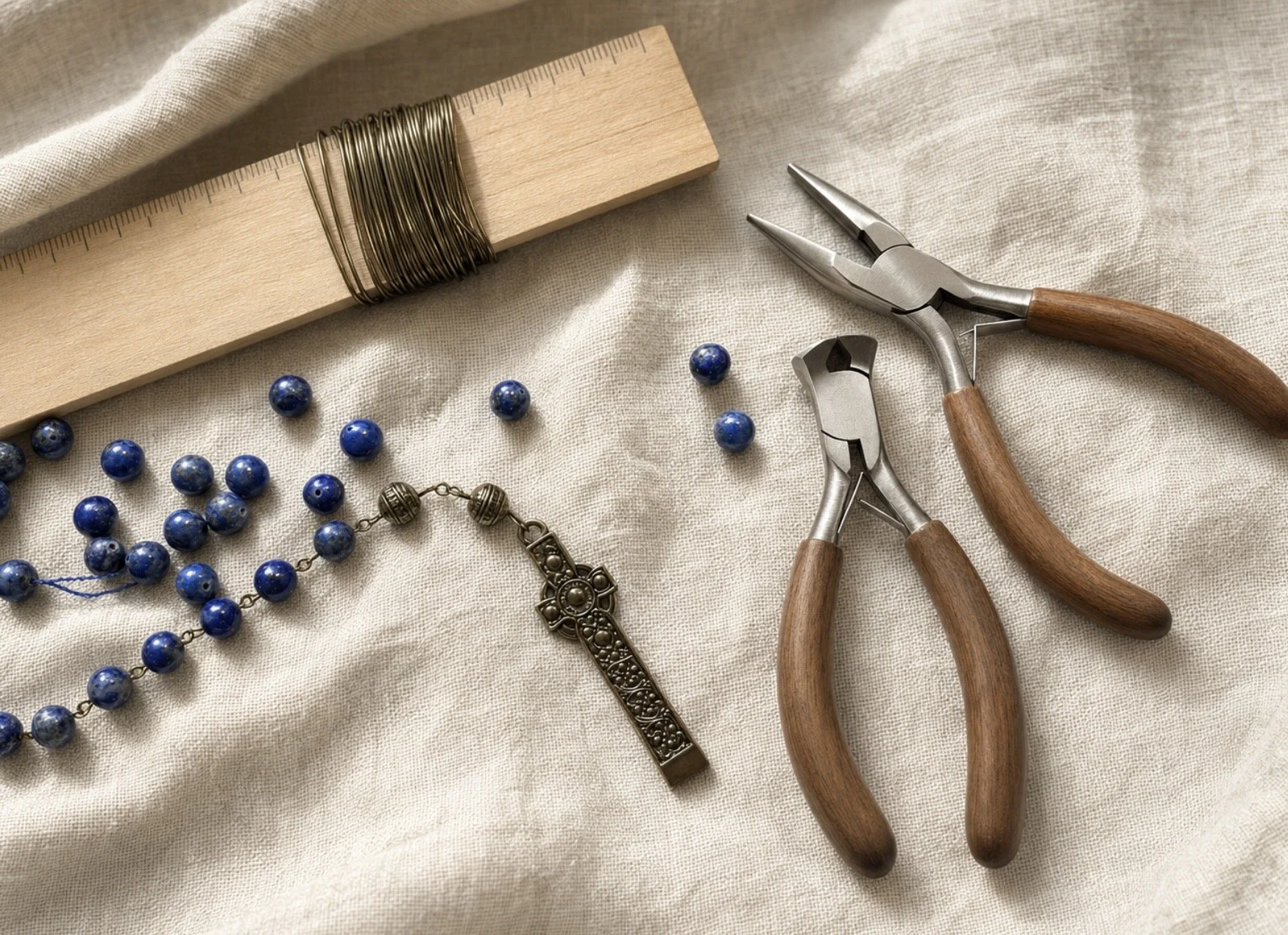
Before a rosary becomes something that can be held in prayer, it begins as a small scattering on my workbench: beads, wire, cord, a cross, perhaps a medal.
Each piece has its own shape and weight, but nothing yet binds them together. The work begins by choosing one piece, then another, and giving them relationship.
One bead. One connection. Then the next.
I am an Irish maker living in Scotland, and much of my working life is spent making rosaries and prayer beads. Over time, this repeated work has taught me that the hands can sometimes lead the heart where the mind struggles to go.
There are days when words for prayer come easily. There are others when they do not—when grief, uncertainty or simple tiredness makes language feel inadequate. At such times, a tangible practice can give prayer somewhere to begin.
The fingers move. A bead turns. The breath settles. Attention returns.
Prayer becomes something we can hold.
This does not mean that a devotional object possesses some magic of its own. A bead remains a bead; wire remains wire. Nor is every moment of making automatically prayerful. I can become distracted at my workbench just as readily as anywhere else.
But the repetition offers an invitation to return.
That may be one of the most compassionate things prayer beads teach us. When our thoughts wander, the bead in our hand does not rebuke us. It simply offers us another beginning.
Here. Now. This breath. This prayer.
The spiritual life is perhaps less about achieving perfect attention than learning how to return with gentleness.
When I am making something for another person, I may know a little of the life into which it will travel. Sometimes an object is being made to accompany grief, recovery or discernment. It may be intended for someone approaching a threshold in life, or for a person who needs to feel that they are being held in prayer.
At other times, I know little more than a name.
Even then, making can become an act of hospitality: quietly making room for another person before we have ever met.
Intention is not control. We cannot decide what an object will mean to someone or how God will meet them through it. We can only offer our care and attention, trusting that what we make will take on a life beyond our hands.
The Christian tradition has always understood that ordinary matter can carry extraordinary meaning: water, oil, bread, wine, wood and stone. The material world is not something from which faith must escape. Again and again, it becomes the place where grace is encountered.
This is one reason my thoughts return so often to Iona.
Iona is a small island off the west coast of Scotland, shaped by sea, wind, stone and centuries of prayer. Its spiritual inheritance holds together things we sometimes separate: prayer and work, solitude and community, contemplation and action.
Iona does not speak to me of escaping the world. It speaks of allowing prayer to form us so that we can return to the world differently.
Faith within an intentional community cannot remain merely an inward feeling. It must become welcome, service, patience, courage and care. It is tested in the ordinary work of living alongside other people.
A string of prayer beads offers a modest image of such a community.
Each bead remains distinct. The thread does not erase its colour, shape or character. Yet each is held in relationship with the others. The thread passes through them all, largely unseen, creating something that no single bead could become alone.
At its best, a community of faith is like this. It does not require us to become identical. It gives our differences a shared direction.
Prayer can become the thread—not as a way of avoiding difficulty or disagreement, but as a rhythm that continually returns us to love, responsibility and common purpose.
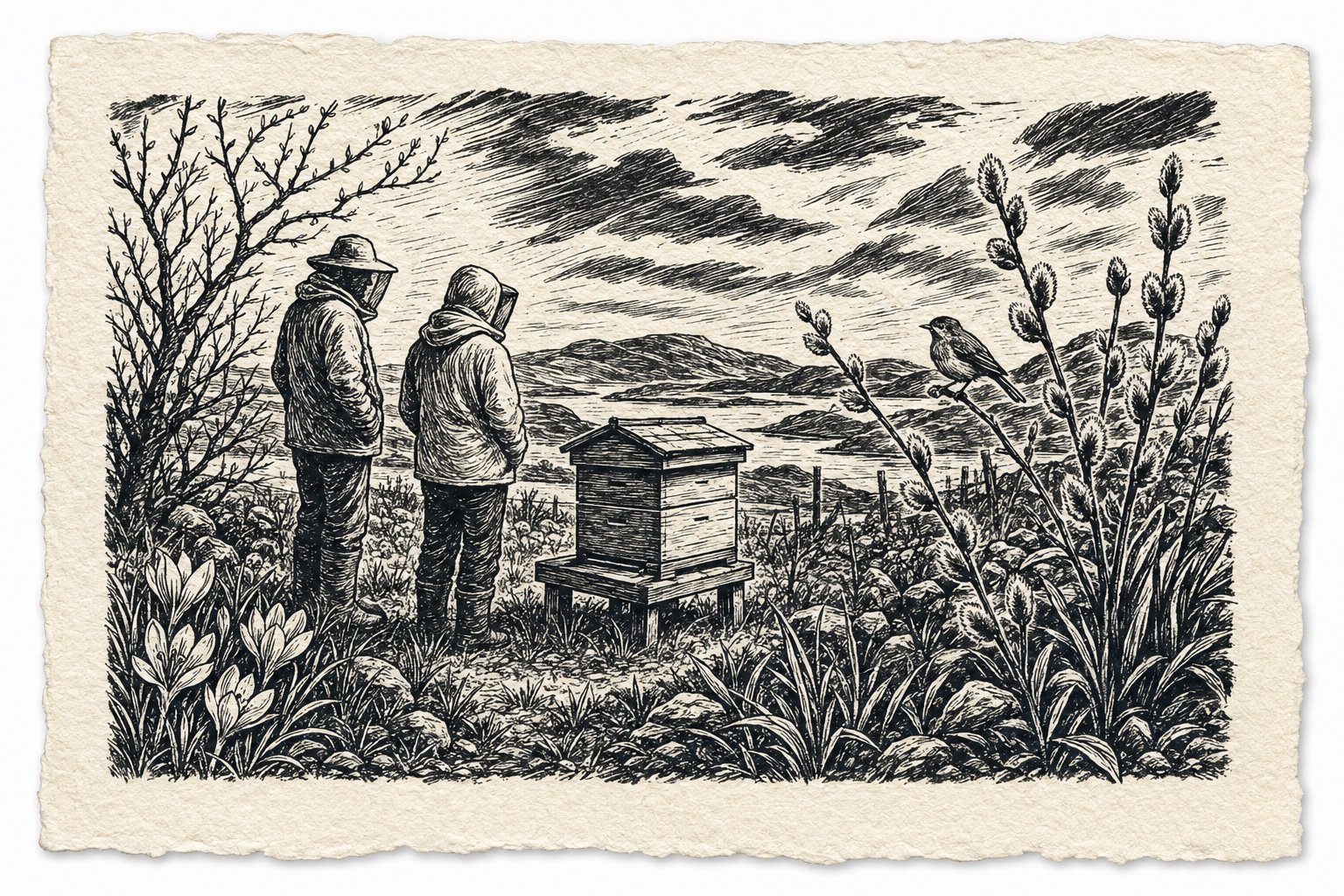
I am also a beekeeper, and the life of a hive has taught me to respect the cumulative power of small, repeated acts. I am wary of making bees carry too many human metaphors, but they remind me that a shared life is sustained by work that may be almost invisible from the outside.
Communities are built in much the same way: through meals prepared, doors opened, cups of tea made, letters written, grief witnessed, wrongs challenged and lonely people remembered.
These actions may not appear remarkable on their own. Gathered together, however, they become a culture of care.
Prayer and action are not rivals. Prayer gives our action roots, while action gives our prayer consequence.
If prayer truly opens us to the presence of God, it should also make us more available to the world: more attentive to suffering, more willing to welcome, more courageous in the face of injustice and more generous with whatever has been entrusted to our hands.
When I finish making a rosary, I test every connection. I imagine it not as something preserved untouched, but as something used. It may be carried in a pocket, pressed into a palm, taken on a pilgrimage or held beside a hospital bed. In time, its surface may change through contact with human hands.
That wear is not a diminishment of the object. It is evidence of relationship.
Perhaps a life of prayer is formed in the same way—not by being kept separate and pristine, but by being handled, lived and offered in love.
Perhaps this is also what it means to consecrate a day: not to lift it out of ordinary life, but to offer the ordinary back to God.
One bead. One breath. One task. One person. One small, faithful act of love.
Then another.
Fiach
Apiarist & Maker
Handmade in Scotland • Faith • Bees • Heritage
Fiach O’Broin-Molloy is the maker and apiarist behind Paisley Honey in Scotland, where he creates handmade rosaries, prayer beads and devotional objects shaped by faith, heritage and the sacredness of work done by hand.
Connect with us:
Instagram & X: @PaisleyHoneyCo
Handcrafted with care. Rooted in tradition.